
DRAMA
Drama is the specific mode of fiction represented in performance. The term comes from a Greek word meaning "action", which is derived from "to do". The two masks associated with drama represent the traditional generic division between comedy and tragedy. They are symbols of the ancient Greek Muses, Thalia, and Melpomene. Thalia was the Muse of comedy (the laughing face), while Melpomene was the Muse of tragedy (the weeping face). Considered as a genre of poetry in general, the dramatic mode has been contrasted with the epic and the lyrical modes ever since Aristotle's Poetics (c. 335 BCE)—the earliest work of dramatic theory.
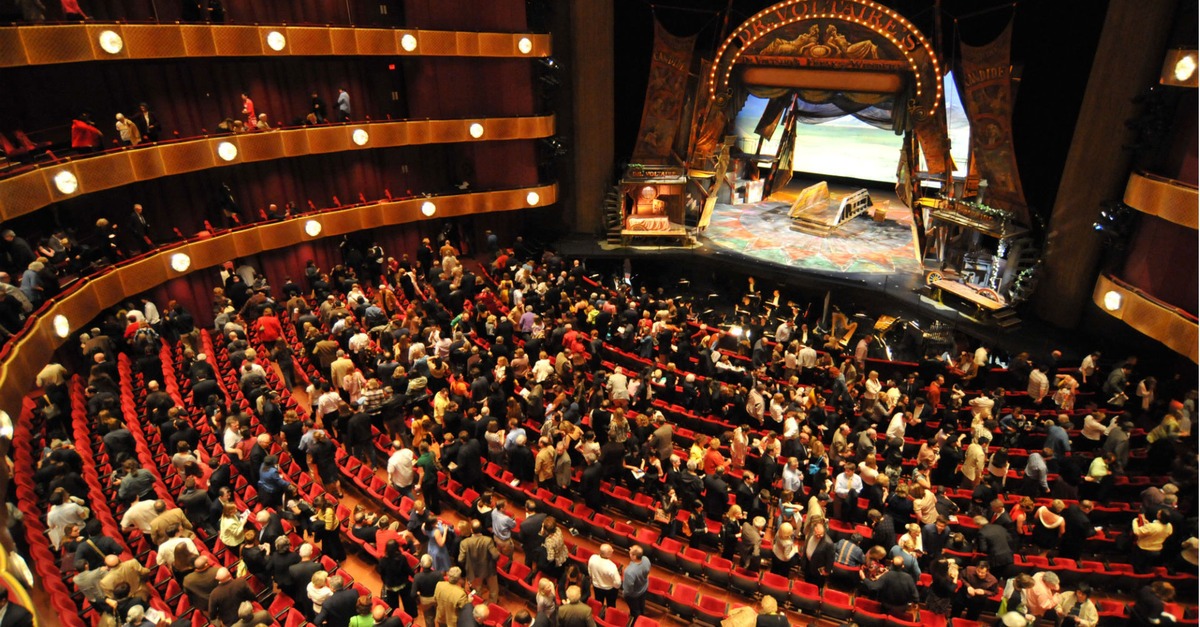
Drama is often combined with music and dance: the drama in opera is generally sung throughout; musicals generally include both spoken dialogue and songs; and some forms of drama have incidental music or musical accompaniment underscoring the dialogue (melodrama and Japanese Nō, for example). Closet drama describes a form that is intended to be read, rather than performed. In improvisation, the drama does not pre-exist the moment of performance; performers devise a dramatic script spontaneously before an audience.
 |
| Opera |
TRAGEDY
Tragedy is a form of drama based on human suffering that invokes an accompanying catharsis or pleasure in audiences. While many cultures have developed forms that provoke this paradoxical response, the term tragedy often refers to a specific tradition of drama that has played a unique and important role historically in the self-definition of Western civilisation.That tradition has been multiple and discontinuous, yet the term has often been used to invoke a powerful effect of cultural identity and historical continuity—"the Greeks and the Elizabethans, in one cultural form; Hellenes and Christians, in a common activity," as Raymond Williams puts it.
From its origins in the theatre of ancient Greece 2500 years ago, from which there survives only a fraction of the work of Aeschylus, Sophocles and Euripides; through its singular articulations in the works of Shakespeare, Lope de Vega, Jean Racine, and Friedrich Schiller to the more recent naturalistic tragedy of August Strindberg; Samuel Beckett's modernist meditations on death, loss and suffering; Müller's postmodernist reworkings of the tragic canon; and Joshua Oppenheimer's incorporation of tragic pathos in his nonfiction film, The Act of Killing (2012)
 |
| The Act of Killing (2012) |
** Watch movie : http://putlockers.ch/watch-the-act-of-killing-online-free-putlocker.html
COMEDY
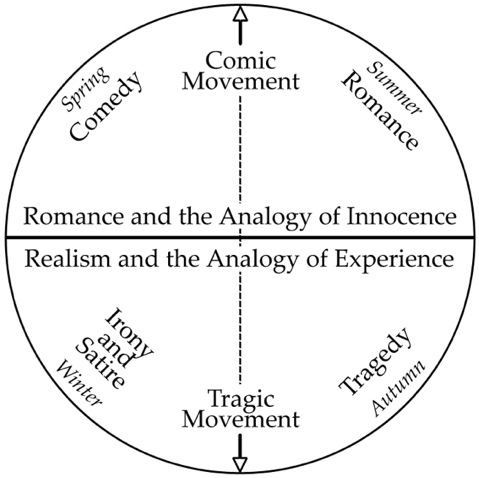
In a modern sense, comedy refers to any discourse or work generally intended to be humorous or amusing by inducing laughter, especially in theatre, television, film, and stand-up comedy. The origins of the term are found in Ancient Greece. In the Athenian democracy, the public opinion of voters was influenced by the political satire performed by the comic poets at the theaters. The theatrical genre of Greek comedy can be described as a dramatic performance which pits two groups or societies against each other in an amusing agon or conflict. Northrop Frye depicted these two opposing sides as a "Society of Youth" and a "Society of the Old". A revised view characterizes the essential agon of comedy as a struggle between a relatively powerless youth and the societal conventions that pose obstacles to his hopes. In this struggle, the youth is understood to be constrained by his lack of social authority, and is left with little choice but to take recourse in ruses which engender very dramatic irony which provokes laughter.
 |
| Northrop Frye and Critical Method |
GREEK THEATER
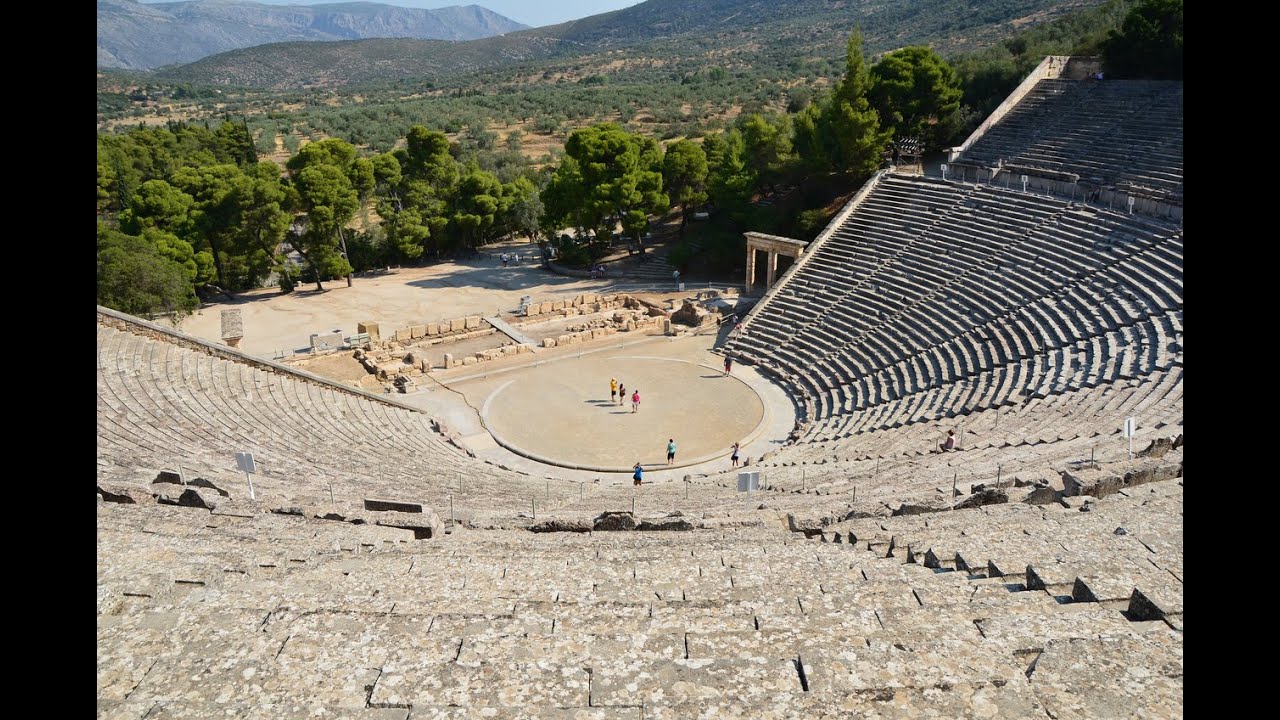
The Greek theater history began with festivals honoring their gods. A god, Dionysus, was honored with a festival called by "City Dionysia". In Athens, during this festival, men used to perform songs to welcome Dionysus. Plays were only presented at City Dionysia festival.
Athens was the main center for these theatrical traditions. Athenians spread these festivals to its numerous allies in order to promote a common identity.
At the early Greek festivals, the actors, directors, and dramatists were all the same person. After some time, only three actors were allowed to perform in each play. Later few non-speaking roles were allowed to perform on-stage. Due to limited number of actors allowed on-stage, the chorus evolved into a very active part of Greek theater. Music was often played during the chorus' delivery of its lines.
Three well-known Greek tragedy playwrights of the fifth century are Sophocles, Euripides and Aeschylus.
 |
| The Famous Greek Theater |
MEDEA

In Greek mythology, Medea is a sorceress who was the daughter of King Aeëtes of Colchis, niece of Circe, granddaughter of the sun god Helios, and later wife to the hero Jason. In Euripides's play Medea, Jason abandons Medea when Creon, king of Corinth, offers his daughter Glauce. The play tells of Medea avenging her husband's betrayal by killing their children.
Medea figures in the myth of Jason and the Argonauts, a myth known best from a late literary version worked up by Apollonius of Rhodes in the 3rd century BC and called the Argonautica. Medea is known in most stories as an enchantress and is often depicted as being a priestess of the goddess Hecate or a witch. The myth of Jason and Medea is very old, originally written around the time Hesiod wrote the Theogony.
*CLOSE UP*

ICARUS
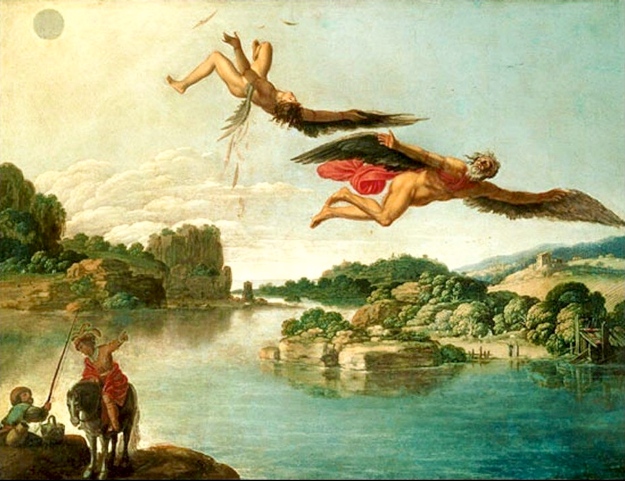
In Greek mythology, Icarus is the son of the master craftsman Daedalus, the creator of the Labyrinth. Often depicted in art, Icarus and his father attempt to escape from Crete by means of wings that his father constructed from feathers and wax. Icarus' father warns him first of complacency and then of hubris, asking that he fly neither too low nor too high, so the sea's dampness would not clog his wings or the sun's heat melt them. Icarus ignored his father's instructions not to fly too close to the sun, when the wax in his wings melted and he fell into the sea. This tragic theme of failure at the hands of hubris contains similarities to that of Phaëthon.
 |
| Fall of Icarus |
by: W. H. AUDEN
About suffering they were never wrong,
The Old Masters; how well, they understood
Its human position; how it takes place
While someone else is eating or opening a window or just walking dully along;
How, when the aged are reverently, passionately waiting
For the miraculous birth, there always must be
Children who did not specially want it to happen, skating
On a pond at the edge of the wood:
They never forgot
That even the dreadful martyrdom must run its course
Anyhow in a corner, some untidy spot
Where the dogs go on with their doggy life and the torturer's horse
Scratches its innocent behind on a tree.
In Breughel's Icarus, for instance: how everything turns away
Quite leisurely from the disaster; the ploughman may
Have heard the splash, the forsaken cry,
But for him it was not an important failure; the sun shone
As it had to on the white legs disappearing into the green
Water; and the expensive delicate ship that must have seen
Something amazing, a boy falling out of the sky,
had somewhere to get to and sailed calmly on.
The Old Masters; how well, they understood
Its human position; how it takes place
While someone else is eating or opening a window or just walking dully along;
How, when the aged are reverently, passionately waiting
For the miraculous birth, there always must be
Children who did not specially want it to happen, skating
On a pond at the edge of the wood:
They never forgot
That even the dreadful martyrdom must run its course
Anyhow in a corner, some untidy spot
Where the dogs go on with their doggy life and the torturer's horse
Scratches its innocent behind on a tree.
In Breughel's Icarus, for instance: how everything turns away
Quite leisurely from the disaster; the ploughman may
Have heard the splash, the forsaken cry,
But for him it was not an important failure; the sun shone
As it had to on the white legs disappearing into the green
Water; and the expensive delicate ship that must have seen
Something amazing, a boy falling out of the sky,
had somewhere to get to and sailed calmly on.
 DEUS EX MACHINA
Deus ex machina is a Latin calque from Greek ἀπὸ μηχανῆς θεός (apò mēkhanês theós), meaning "god from the machine". The term has evolved to mean a plot device
whereby a seemingly unsolvable problem is suddenly and abruptly
resolved by the inspired and unexpected intervention of some new event,
character, ability or object. Depending on how it is done, it can be
intended to allow a story to continue when the writer has "painted
himself into a corner" and sees no other way out, to surprise the
audience, to bring the tale to a happy ending, or as a comedic device.
*CLOSE UP*


GOLDEN FLEECE
 |
| Jason and The Golden Fleece |
In Greek mythology, the Golden Fleece is the fleece of the gold-hair winged ram, which was held in Colchis. The fleece is a symbol of authority and kingship. It figures in the tale of the hero Jason and his band of Argonauts, who set out on a quest for the fleece by order of King Pelias, in order to place Jason rightfully on the throne of Iolcus in Thessaly. Through the help of Medea, they acquire the Golden Fleece. The story is of great antiquity and was current in the time of Homer (eighth century BC). It survives in various forms, among which the details vary.
Solar Deity
A solar deity (also sun god or sun goddess) is a sky deity who represents the Sun, or an aspect of it, usually by its perceived power and strength. Solar deities and sun worship can be found throughout most of recorded history in various forms. The Sun is sometimes referred to by its Latin name Sol or by its Greek name Helios. The English word sun stems from Proto-Germanic.
 |
| Ra, Ancient Egyptian God of The Sun and King of The Gods |
The Neolithic concept of a "solar barge" (also "solar bark", "solar barque", "solar boat" and "sun boat", a mythological representation of the sun riding in a boat) is found in the later myths of ancient Egypt, with Ra and Horus. Predynasty Egyptian beliefs attribute Atum as the sun-god and Horus as a god of the sky and sun. As the Old Kingdom theocracy gained power, early beliefs were incorporated with the expanding popularity of Ra and the Osiris-Horus mythology. Atum became Ra-Atum, the rays of the setting sun.
SAMSON AND DELILAH (OPERA)
 |
| Samson and Delilah |
Samson and Delilah (French: Samson et Dalila), Op. 47, is a grand opera in three acts and four scenes by Camille Saint-Saëns to a French libretto by Ferdinand Lemaire. It was first performed in Weimar at the Grossherzogliches (Grand Ducal) Theater (now the Staatskapelle Weimar) on 2 December 1877 in a German translation.
The opera is based on the Biblical tale of Samson and Delilah found in Chapter 16 of the Book of Judges in the Old Testament. It is the only opera by Saint-Saëns that is regularly performed. The second act love scene in Delilah's tent is one of the set pieces that define French opera. Two of Delilah's arias are particularly well known: "Printemps qui commence" (“Spring begins”) and "Mon cœur s'ouvre à ta voix" ("My heart opens itself to your voice", also known as "Softly awakes my heart"), the latter of which is one of the most popular recital pieces in the mezzo-soprano/contralto repertoire.
 |
| Samson and Delilah Paint by: Peter Paul Rubens |
EXTRA INFORMATION
In Just-
by: E. E. Cumming
n Just-
spring when the world is mud-
luscious the little
lame balloonman
whistles far and wee
and eddieandbill come
running from marbles and
piracies and it's
spring
when the world is puddle-wonderful
the queer
old balloonman whistles
far and wee
and bettyandisbel come dancing
from hop-scotch and jump-rope and
it's
spring
and
the
goat-footed
balloonMan whistles
far
and
wee>> Analysis:
 "in Just-" encompasses everything we love about spring
(even puddles for the children). This is a poem which celebrates the joy of Spring. Everything is in
Spring and the "green" children enjoy the excitement of youthful games.
All is wonderful here. There is no thought of Winter and old age here. Children are outdoors playing games,
people are whistling and happy, people are dancing, and it's time for
carnivals.
The only adult in this poem is the magical balloon man who makes balloon
animals or magical shapes for the children. Children are often a subject of Cummings' poetry. In some poems,
he writes about kids. In others, he writes as a kid. Perhaps it is
because it's something everyone can relate to. Or, maybe, it's because
it's something he wishes he could go back to.
"in Just-" encompasses everything we love about spring
(even puddles for the children). This is a poem which celebrates the joy of Spring. Everything is in
Spring and the "green" children enjoy the excitement of youthful games.
All is wonderful here. There is no thought of Winter and old age here. Children are outdoors playing games,
people are whistling and happy, people are dancing, and it's time for
carnivals.
The only adult in this poem is the magical balloon man who makes balloon
animals or magical shapes for the children. Children are often a subject of Cummings' poetry. In some poems,
he writes about kids. In others, he writes as a kid. Perhaps it is
because it's something everyone can relate to. Or, maybe, it's because
it's something he wishes he could go back to.This poem is written in dada with added spaces and line breaks. He does it to add tempo and rhythm changes while being innovative and seen as charasmatic.
i carry your heart with me
by: E. E. Cumming
i carry your heart with me(i carry it in
my heart)i am never without it(anywhere
i go you go,my dear;and whatever is done
by only me is your doing,my darling)
i fear
no fate(for you are my fate,my sweet)i want
no world(for beautiful you are my world,my true)
and it’s you are whatever a moon has always meant
and whatever a sun will always sing is you
here is the deepest secret nobody knows
(here is the root of the root and the bud of the bud
and the sky of the sky of a tree called life;which grows
higher than soul can hope or mind can hide)
and this is the wonder that's keeping the stars apart
>> Analysis:
In short, this is a love poem in which the speaker is telling his beloved that wherever he goes, he always carries his lover’s heart with him. In the poem, the speaker is talking directly to his muse, referring to her as “my darling” and “my dear.” Throughout the poem, the speaker is telling his lover how much he loves and adores her, telling her that she is his fate and his entire world. The poem is rich in imagery, with lines such as “and this is the wonder that’s keeping the stars apart,” leaving an indelible mark on the reader.


No comments:
Post a Comment