ITHACA
Ithaca or Ithaka is a Greek island located in the Ionian Sea, off the northeast coast of Kefalonia and to the west of continental Greece.
Ithaca's main island has an area of 96 square kilometres (37 sq mi) and had a population in 2011 of 3,231. It is the second-smallest of seven main Ionian Islands, after Paxi. Ithaca is a separate regional unit of the Ionian Islands region, and the only municipality of the regional unit. The capital is Vathy or Ithaki. Modern Ithaca is generally identified with Homer's Ithaca, the home of Odysseus, whose delayed return to the island is the Odyssey's plot.
Odysseus was one of the suitors of Helen.Foreseeing that the situation would not lead anywhere, as there was a multitude of suitors and Tyndareus was unable to choose a husband for her in fear of offending them, he made a proposal to him. He said that if Tyndareus would help him win the hand of Penelope, then he would provide a solution to the problem.He then told all of the suitors to swear an oath, which was hence named the Oath of Tyndareus, according to which no matter who Helen would pick for her husband, they would all support the couple. Everyone agreed and Helen chose Menelaus, king of Sparta. Odysseus then took Penelope for his bride and went back to Ithaca.
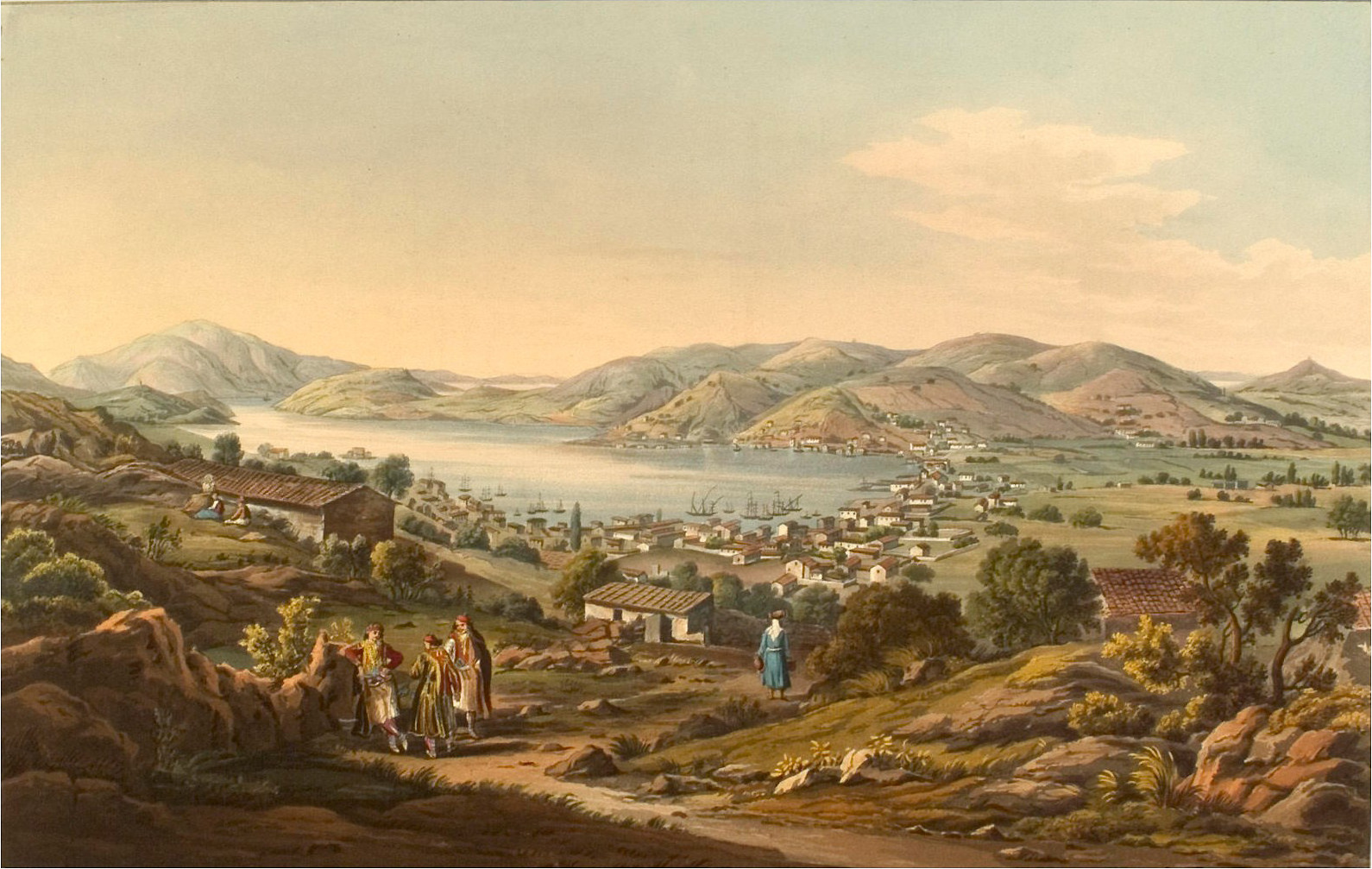 |
| Itacha by Edward Dodwell (1821) |
HOMERIC SIMILE
 Homeric simile, also called an epic simile is a detailed comparison in the form of a simile that is many lines in length. The word "Homeric" is based on the Greek author, Homer, who composed the two famous Greek epics, the Iliad and the Odyssey. Many authors continue to use this type of simile in their writings.
The typical Homeric simile makes a comparison to some kind of event, in the form "like a ____ when it ______." The object of the comparison is usually something strange or unfamiliar to something ordinary and familiar. The Iliad, for instance, contains many such similes comparing fighting warriors to lions attacking wild boars or other prey. These similes serve to take the reader away from the battlefield for a brief while, into the world of pre-war peace and plenty. Often, they occur at a moment of high action or emotion, especially during a battle.
 |
| Homeric Simile is named after the author of the "Odyssey" |
EXTRA INFORMATION
~SHAKESPEARES's SONNET

Shakespeare's Sonnets is the title of a collection of 154 sonnets by William Shakespeare, which covers themes such as the passage of time, love, beauty and mortality. The first 126 sonnets are addressed to a young man; the last 28 to a woman.
The sonnets were first published in a 1609 quarto with the full stylised title: SHAKE-SPEARES SONNETS. Never before Imprinted. (although sonnets 138 and 144 had previously been published in the 1599 miscellany The Passionate Pilgrim). The quarto ends with "A Lover's Complaint", a narrative poem of 47 seven-line stanzas written in rhyme royal – though some scholars have argued convincingly against Shakespeare's authorship of the poem.
The sonnets to the young man express overwhelming, obsessional love. Other sonnets express the speaker's love for the young man; brood upon loneliness, death, and the transience of life; seem to criticise the young man for preferring a rival poet; express ambiguous feelings for the speaker's mistress; and pun on the poet's name. The final two sonnets are allegorical treatments of Greek epigrams referring to the "little love-god" Cupid.
Shakespeare's Sonnets 18
Shall I compare thee to a summer’s day?
Thou art more lovely and more temperate:
Rough winds do shake the darling buds of May,
And summer’s lease hath all too short a date:
Sometime too hot the eye of heaven shines,
And often is his gold complexion dimm’d;
And every fair from fair sometime declines,
By chance or nature’s changing course untrimm’d;
But thy eternal summer shall not fade
Nor lose possession of that fair thou owest;
Nor shall Death brag thou wander’st in his shade,
When in eternal lines to time thou growest:
So long as men can breathe or eyes can see,
So long lives this, and this gives life to thee.
Shall I compare thee to a summer’s day?
Thou art more lovely and more temperate:
Rough winds do shake the darling buds of May,
And summer’s lease hath all too short a date:
Sometime too hot the eye of heaven shines,
And often is his gold complexion dimm’d;
And every fair from fair sometime declines,
By chance or nature’s changing course untrimm’d;
But thy eternal summer shall not fade
Nor lose possession of that fair thou owest;
Nor shall Death brag thou wander’st in his shade,
When in eternal lines to time thou growest:
So long as men can breathe or eyes can see,
So long lives this, and this gives life to thee.
*Summary, Theme & Analysis Video: http://study.com/academy/lesson/shakespeares-sonnet-18-summary-theme-analysis.html
~LORD's PRAYER
The Lord's Prayer (also called the Our Father or Pater Noster among other names) is a venerated Christian prayer that, according to the New Testament, was taught by Jesus to his disciples. Two versions of it are recorded: a longer form in the Gospel of Matthew as part of the Sermon on the Mount, and a shorter form in the Gospel of Luke as a response by Jesus to a request by "one of his disciples" to teach them "to pray as John taught his disciples." The context of the prayer in Matthew is a discourse deploring people who pray ostentatiously.
 |
| Matthew 6:9–13 |
 |
| Luke 11:2–4 (NRSV) |
** PREFIX, ROOT, SUFFIX **
-al : of, relating to, or characterized by
arrival : the act of coming to or reaching a place
approval : acceptance of an idea, action, etc
de : down, away from
deaden : to make something weaken or less
deafen : to make something unable to hear
decisive : able to make choice quickly or confidenly

No comments:
Post a Comment