DECLARATION OF INDEPENDENCE
When armed conflict between bands of American colonists and British soldiers began in April 1775, the Americans were ostensibly fighting only for their rights as subjects of the British crown. By the following summer, with the Revolutionary War in full swing, the movement for independence from Britain had grown, and delegates of the Continental Congress were faced with a vote on the issue. In mid-June 1776, a five-man committee including Thomas Jefferson, John Adams and Benjamin Franklin was tasked with drafting a formal statement of the colonies’ intentions. The Congress formally adopted the Declaration of Independence–written largely by Jefferson–in Philadelphia on July 4, a date now celebrated as the birth of American independence.
 | ||
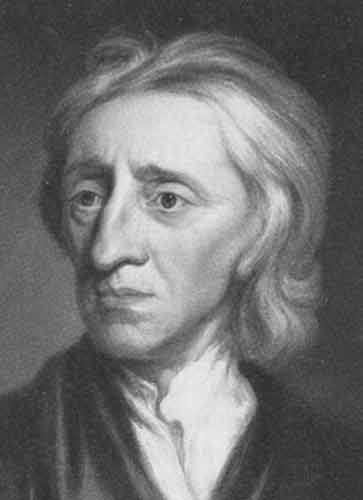 |
| Portrait of Locke in 1697 |
John Locke FRS (29 August 1632 – 28 October 1704) was an English philosopher and physician, widely regarded as one of the most influential of Enlightenment thinkers and commonly known as the "Father of Liberalism". Considered one of the first of the British empiricists, following the tradition of Sir Francis Bacon, he is equally important to social contract theory. His work greatly affected the development of epistemology and political philosophy. His writings influenced Voltaire and Jean-Jacques Rousseau, many Scottish Enlightenment thinkers, as well as the American revolutionaries. His contributions to classical republicanism and liberal theory are reflected in the United States Declaration of Independence.
>> Declaration of The Right of Man and of The Citizen
 The Declaration of the Rights of Man and of the Citizen , passed by France's National Constituent Assembly in August 1789, is a fundamental document of the French Revolution and in the history of human and civil rights. The Declaration was directly influenced by Thomas Jefferson, working with General Lafayette, who introduced it. Influenced also by the doctrine of "natural right", the rights of man are held to be universal: valid at all times and in every place, pertaining to human nature itself. It became the basis for a nation of free individuals protected equally by law. It is included in the preamble of the constitutions of both the Fourth French Republic (1946) and Fifth Republic (1958) and is still current. Inspired in part by the American Revolution, and also by the Enlightenment philosophers, the Declaration was a core statement of the values of the French Revolution and had a major impact on the development of freedom and democracy in Europe and worldwide.
The Declaration, together with Magna Carta, the American Declaration of Independence, Constitution, and Bill of Rights, inspired in large part the 1948 United NationsUniversal Declaration of Human Rights.
~Les Miserables
 Les Misérables is a French historical novel by Victor Hugo, first published in 1862, that is considered one of the greatest novels of the 19th century. In the English-speaking world, the novel is usually referred to by its original French title. However, several alternatives have been used, including The Miserables, The Wretched, The Miserable Ones, The Poor Ones, The Wretched Poor, The Victims and The Dispossessed. Beginning in 1815 and culminating in the 1832 June Rebellion in Paris, the novel follows the lives and interactions of several characters, particularly the struggles of ex-convict Jean Valjean and his experience of redemption.
Examining the nature of law and grace, the novel elaborates upon the history of France, the architecture and urban design of Paris, politics, moral philosophy, antimonarchism, justice, religion, and the types and nature of romantic and familial love. Les Misérables has been popularized through numerous adaptations for the stage, television, and film, including a musical and a film adaptation of that musical.
*** PREFIX, ROOT, SUFFIX ***
ab- : from, from off, down, away
abrogation : annulling of (a law) by legislative action
abrupt : sudden, unceremonious
abnormal : deviating from a fixed rule, irregular
de- : down, away from
deaden : to make something weaker or less noticeable
decisive : able to make choice quickly and cofidently
ob- / op- : toward, against, across, down
obstacle : something that makes it difficult
opponent : rival
opposite : located at another side
obstacle : something that makes it difficult
opponent : rival
opposite : located at another side

No comments:
Post a Comment