Homework
HELEN OF TROY (2003)
 In Greek mythology, Helen of Troy (Greek Ἑλένη Helénē, pronounced [helénɛː]), also known as Helen of Sparta, or simply Helen, was the daughter of Zeus and Leda, and was a sister of Castor, Pollux, and Clytemnestra.
In Greek myths, she was considered the most beautiful woman in the
world. By marriage she was Queen of Laconia, a province within Homeric
Greece, the wife of King Menelaus. Her abduction by Prince Paris of Troy brought about the Trojan War. Elements of her putative biography come from classical authors such as Aristophanes, Cicero, Euripides and Homer (both The Iliad and The Odyssey).
In Greek mythology, Helen of Troy (Greek Ἑλένη Helénē, pronounced [helénɛː]), also known as Helen of Sparta, or simply Helen, was the daughter of Zeus and Leda, and was a sister of Castor, Pollux, and Clytemnestra.
In Greek myths, she was considered the most beautiful woman in the
world. By marriage she was Queen of Laconia, a province within Homeric
Greece, the wife of King Menelaus. Her abduction by Prince Paris of Troy brought about the Trojan War. Elements of her putative biography come from classical authors such as Aristophanes, Cicero, Euripides and Homer (both The Iliad and The Odyssey).
In her youth, she was abducted by Theseus.
A competition between her suitors for her hand in marriage sees
Menelaus emerge victorious. An oath sworn beforehand by all the suitors
(known as the Oath of Tyndareus)
requires them to provide military assistance in the case of her
abduction; this oath culminates in the Trojan War. When she marries
Menelaus she is still very young; whether her subsequent involvement
with Paris is an abduction or a seduction is ambiguous.
The Meaning and Origin of The Expression:
"The Face That Launched A Thousand Ship"
Was this the face that launch'd a thousand ships,
And burnt the topless towers of Ilium?
Sweet Helen, make me immortal with a kiss.
Her lips suck forth my soul: see where it flies!
Come, Helen, come, give me my soul again.
Here will I dwell, for heaven is in these lips,
And all is dross that is not Helena.
I will be Paris, and for love of thee,
Instead of Troy, shall Wittenberg be sack'd;
And I will combat with weak Menelaus,
And wear thy colours on my plumed crest;
Yea, I will wound Achilles in the heel,
And then return to Helen for a kiss.
O, thou art fairer than the evening air
Clad in the beauty of a thousand stars;
Brighter art thou than flaming Jupiter
When he appear'd to hapless Semele;
More lovely than the monarch of the sky
In wanton Arethusa's azur'd arms;
And none but thou shalt be my paramour!
And burnt the topless towers of Ilium?
Sweet Helen, make me immortal with a kiss.
Her lips suck forth my soul: see where it flies!
Come, Helen, come, give me my soul again.
Here will I dwell, for heaven is in these lips,
And all is dross that is not Helena.
I will be Paris, and for love of thee,
Instead of Troy, shall Wittenberg be sack'd;
And I will combat with weak Menelaus,
And wear thy colours on my plumed crest;
Yea, I will wound Achilles in the heel,
And then return to Helen for a kiss.
O, thou art fairer than the evening air
Clad in the beauty of a thousand stars;
Brighter art thou than flaming Jupiter
When he appear'd to hapless Semele;
More lovely than the monarch of the sky
In wanton Arethusa's azur'd arms;
And none but thou shalt be my paramour!
Meaning
- A reference to the mythological figure Helen of Troy (or some would say, to Aphrodite). Her abduction by Paris was said to be the reason for a fleet of a thousand ships to be launched into battle, initiating the Trojan Wars.
Origin
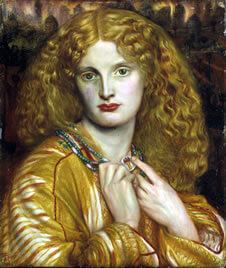
Christopher Marlowe, in Doctor Faustus (variously dated between 1590 and 1604), referring to Helen of Troy, or as Marlowe had it 'Helen of Greece':

Was this the face that launch'd a thousand ships
And burnt the topless towers of Ilium?
Sweet Helen, make me immortal with a kiss.
ENJOYING STORY

No comments:
Post a Comment