Week 5
HAMLET
 The Tragedy of Hamlet, Prince of Denmark, often shortened to Hamlet, is a tragedy written by William Shakespeare at an uncertain date between 1599 and 1602. Set in the Kingdom of Denmark, the play dramatises the revenge Prince Hamlet is called to wreak upon his uncle, Claudius, by the ghost of Hamlet's father, King Hamlet. Claudius had murdered his own brother and seized the throne, also marrying his deceased brother's widow. Hamlet
is Shakespeare's longest play, and is ranked among the most powerful
and influential tragedies in English literature, with a story capable of
"seemingly endless retelling and adaptation by others".
The Tragedy of Hamlet, Prince of Denmark, often shortened to Hamlet, is a tragedy written by William Shakespeare at an uncertain date between 1599 and 1602. Set in the Kingdom of Denmark, the play dramatises the revenge Prince Hamlet is called to wreak upon his uncle, Claudius, by the ghost of Hamlet's father, King Hamlet. Claudius had murdered his own brother and seized the throne, also marrying his deceased brother's widow. Hamlet
is Shakespeare's longest play, and is ranked among the most powerful
and influential tragedies in English literature, with a story capable of
"seemingly endless retelling and adaptation by others".
Frailty, thy name is Woman
Hamlet:
Heaven and earth,
Must I remember? Why, she would hang on him
As if increase of appetite had grown
By what it fed on, and yet, within a month—
Let me not think on't—Frailty, thy name is woman!—
Must I remember? Why, she would hang on him
As if increase of appetite had grown
By what it fed on, and yet, within a month—
Let me not think on't—Frailty, thy name is woman!—
>> Analysis
Although this quote is spoken by Hamlet in reference to his mother's betrayal and adultery, this quote can be equally applicable to Ophelia as well. 'Frailty' can be interpreted as a weakness in women, women who are fickle-minded or who have no strength of character. In a society dominated by Patriarchial rules, women like Gertrude and Ophelia can certainly be seen as weak and frail because the play remains quite ambiguous about Gertude's role in the murder of King Hamlet. They are merely pawns in the ambitious mechanisations of men like Claudius, Polonius, Laertes and to a certain extent Hamlet himself.
THE DIVINE COMEDY
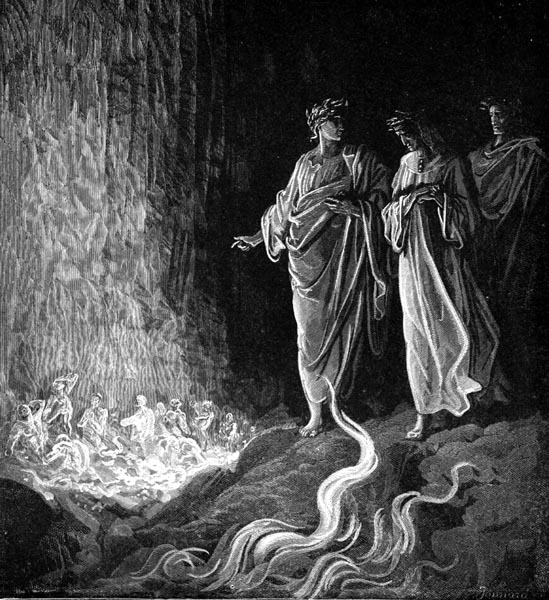 |
| Interior Dante Divine Comedy |
The Divine Comedy (Italian: Divina Commedia [diˈviːna komˈmɛːdja]) is a poem by Dante Alighieri, begun c. 1308 and completed 1320, a year before his death in 1321. It is widely considered the preeminent work of Italian literature and is seen as one of the greatest works of world literature. The poem's imaginative vision of the afterlife is representative of the medieval world-view as it had developed in the Western Church by the 14th century. It helped establish the Tuscan language, in which it is written, as the standardized Italian language. It is divided into three parts: Inferno, Purgatorio, and Paradiso.
On the surface, the poem describes Dante's travels through Hell, Purgatory, and Paradise or Heaven; but at a deeper level, it represents, allegorically, the soul's journey towards God. At this deeper level, Dante draws on medieval Christian theology and philosophy, especially Thomistic philosophy and the Summa Theologica of Thomas Aquinas. Consequently, the Divine Comedy has been called "the Summa in verse".
On the surface, the poem describes Dante's travels through Hell, Purgatory, and Paradise or Heaven; but at a deeper level, it represents, allegorically, the soul's journey towards God. At this deeper level, Dante draws on medieval Christian theology and philosophy, especially Thomistic philosophy and the Summa Theologica of Thomas Aquinas. Consequently, the Divine Comedy has been called "the Summa in verse".
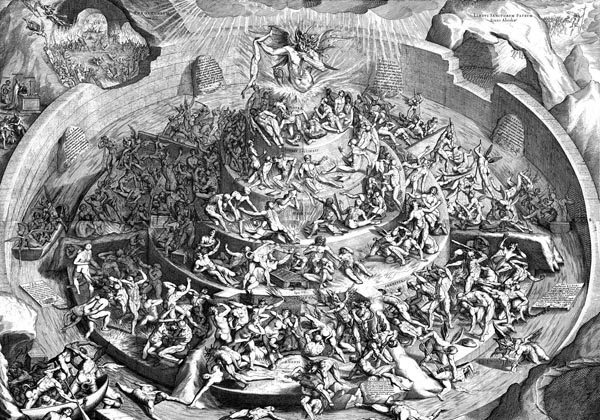

*** PREFIX, ROOT, SUFFIX ***
de- : down, away from
deaden : to make something weaker or less
decisive : able to make choices quickly and confidently
deafen : to make someone unable to hear
fra- : brittle, shattered
fraction : a small part of something
fracture : the result of breaking something
fragile : easily broken or damaged
-ant : a person or thing does a specified thing
observant : good at watching and listening
pollutant : a substance that makes water, air, land, etc. dirty and not safe to use
zeal- : knowledge, passionate of an objective or course of action
zealotry : excess of zeal
zealous : feeling or showing strong support for a person
pro- : many, much in favor of
prolific : producing a large amount of something
proliferate : to increase in number or amount quickly
ad- : forward, to
admit : to allow
advance : to make forward
advantage : a good quality or feature
en-/em- : at, in, on, near, within, into
enlarge : to make something larger
empower : to give power to
encourage : to make something more determined
** WORDS **
- Censor: a person who supervises conduct
- Candid: white; sincere; honest; pure
- Compulsive: having power to compel
- Run for office: to stand as a candidate for an office
- Duty VS Responsibility
> Responsibility ( def: something that you should do )
- Name Calling VS Roll Calling
> Roll Calling (def: the act of saying each names on list)
- Exponent VS Proponent
> Proponent (def: a person who argues or support something)

No comments:
Post a Comment