GENRE
Genre ( "kind" or "sort", from Latin genus (stem gener-), is any category of literature, music, or other forms of art or entertainment, whether written or spoken, audio or visual, based on some set of stylistic criteria. Genres form by conventions that change over time as new genres are invented and the use of old ones is discontinued. Often, works fit into multiple genres by way of borrowing and recombining these conventions.
Genre began as an absolute classification system for ancient Greek literature. Poetry, prose, and performance each had a specific and calculated style that related to the theme of the story. Speech patterns for comedy would not be appropriate for tragedy, and even actors were restricted to their genre under the assumption that a type of person could tell one type of story best. In later periods genres proliferated and developed in response to changes in audiences and creators. Genre became a dynamic tool to help the public make sense out of unpredictable art. Because art is often a response to a social state, in that people write/paint/sing/dance about what they know about, the use of genre as a tool must be able to adapt to changing meanings.
SITCOM
A situation comedy, or sitcom, is a genre of comedy centered on a fixed set of characters who carry over from episode to episode. Sitcoms can be contrasted with sketch comedy where a troupe may use new characters in each sketch, and stand-up comedy where a comedian tells jokes and stories to an audience. Sitcoms originated in radio, but today are found mostly on television as one of its dominant narrative forms. This form can also include mockumentaries.
A situation comedy television program may be recorded in front of a studio audience, depending on the program's production format. The effect of a live studio audience can be imitated or enhanced by the use of a laugh track.

ADAM AND EVE
 |
| Adam and Eve |
 Adam and Eve, according to the creation myth of the Abrahamic religions, were the first man and woman and the ancestors of all humans. The story of Adam and Eve is central to the belief that God created human beings to live in a paradise on earth, although they fell away from that state and formed the present world full of suffering and injustice. It provides the basis for the belief that humanity is in essence a single family, with everyone descended from a single pair of original ancestors. It also provides much of the scriptural basis for the doctrines of the fall of man and original sin that are important beliefs in Christianity, but which are not generally held in Judaism or Islam.
In the Book of Genesis of the Hebrew Bible, chapters one through five, there are two creation narratives with two distinct perspectives. In the first, Adam and Eve are not mentioned (at least not mentioned by name). Instead, God created humankind in God's image and instructed them to multiply and to be stewards over everything else that God had made. In the second narrative, God fashions Adam from dust and places him in the Garden of Eden. Adam is told that he can till the ground and eat freely of all the trees in the garden, except for a tree of the knowledge of good and evil. Subsequently, Eve is created from one of Adam's ribs to be Adam's companion. They are innocent and unashamed about their nakedness. However, a serpent deceives Eve into eating fruit from the forbidden tree, and she gives some of the fruit to Adam. These acts give them additional knowledge, but it gives them the ability to conjure negative and destructive concepts such as shame and evil. God later curses the serpent and the ground. God prophetically tells the woman and the man what will be the consequences of their sin of disobeying God. Then he banishes them from the Garden of Eden.
EXTRA INFORMATION
~No Strings Attached
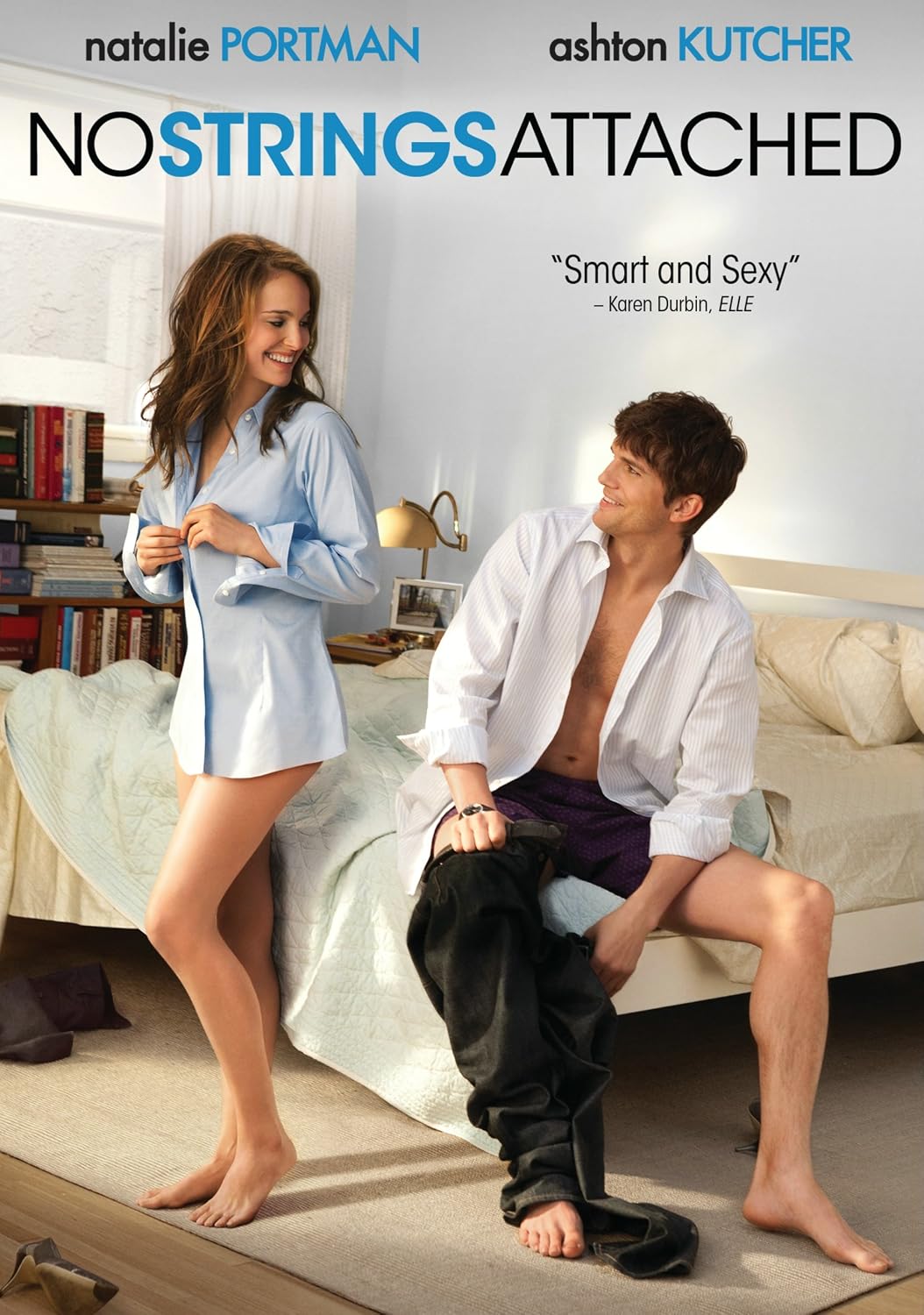 No Strings Attached is a 2011 American romantic comedy film directed by Ivan Reitman and written by Elizabeth Meriwether. Starring Natalie Portman and Ashton Kutcher, the film is about two friends who decide to make a pact to have "no strings attached" casual sex without falling in love with each other. The film was released in the United States on January 21, 2011.
~Jane Eyre
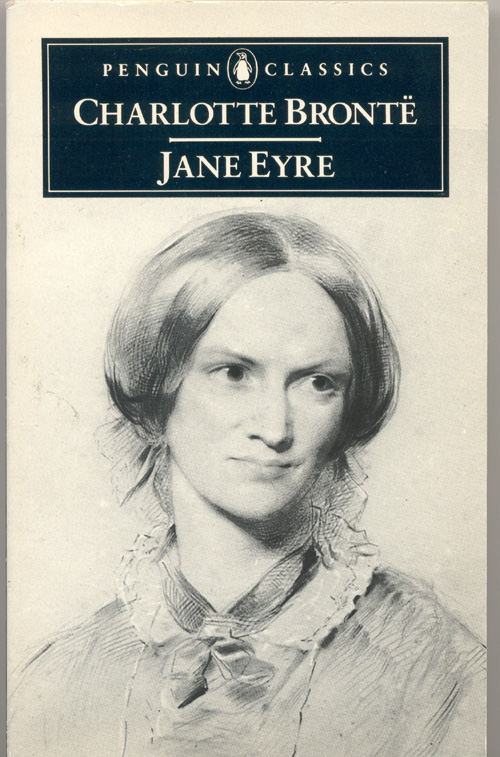 Jane Eyre (originally published as Jane Eyre: An Autobiography) is a novel by English writer Charlotte Brontë. It was published on 16 October 1847, by Smith, Elder & Co. of London, England, under the pen name "Currer Bell." The first American edition was published the following year by Harper & Brothers of New York.
 Primarily of the Bildungsroman genre, Jane Eyre follows the emotions and experiences of its eponymous heroine, including her growth to adulthood and her love for Mr. Rochester, the Byronic master of fictitious Thornfield Hall. In its internalisation of the action—the focus is on the gradual unfolding of Jane's moral and spiritual sensibility, and all the events are coloured by a heightened intensity that was previously the domain of poetry—Jane Eyre revolutionised the art of fiction. Charlotte Brontë has been called the 'first historian of the private consciousness' and the literary ancestor of writers like Joyce and Proust. The novel contains elements of social criticism, with a strong sense of morality at its core, but is nonetheless a novel many consider ahead of its time given the individualistic character of Jane and the novel's exploration of classism, sexuality, religion, and proto-feminism.
*** Jane Eyre and No Strings Attached
~WALT WHITMAN
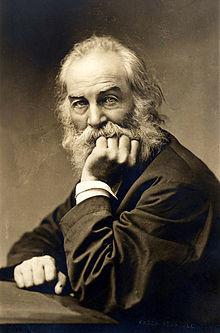 Walter "Walt" Whitman (May 31, 1819 – March 26, 1892) was an American poet, essayist, and journalist. A humanist, he was a part of the transition between transcendentalism and realism, incorporating both views in his works. Whitman is among the most influential poets in the American canon, often called the father of free verse. His work was very controversial in its time, particularly his poetry collection Leaves of Grass, which was described as obscene for its overt sexuality.
 Born in Huntington on Long Island, Whitman worked as a journalist, a teacher, a government clerk, and—in addition to publishing his poetry—was a volunteer nurse during the American Civil War. Early in his career, he also produced a temperance novel, Franklin Evans (1842). Whitman's major work, Leaves of Grass, was first published in 1855 with his own money. The work was an attempt at reaching out to the common person with an American epic. He continued expanding and revising it until his death in 1892. After a stroke towards the end of his life, he moved to Camden, New Jersey, where his health further declined. When he died at age 72, his funeral became a public spectacle.
Children Of Adam
by: Walt Whitman
To the Garden the World
From Pent-Up Aching Rivers
I Sing the Body Electric
A Woman Waits for Me
Spontaneous Me
One Hour to Madness and Joy
Out of the Rolling Ocean the Crowd
Ages and Ages Returning at Intervals
We Two, How Long We Were Fool'd
O Hymen! O Hymenee!
I Am He That Aches with Love
Native Moments
Once I Pass'd Through a Populous City
I Heard You Solemn-Sweet Pipes of the Organ
Facing West from California's Shores
As Adam Earl in the Morning
- > Analysis, Summary, Definition : https://www.cliffsnotes.com/literature/l/leaves-of-grass/summary-and-analysis-children-of-adam/introduction
~THE RAVEN
 "The Raven" is a narrative poem by American writer Edgar Allan Poe. First published in January 1845, the poem is often noted for its musicality, stylized language, and supernatural atmosphere. It tells of a talking raven's mysterious visit to a distraught lover, tracing the man's slow fall into madness. The lover, often identified as being a student, is lamenting the loss of his love, Lenore. The raven seems to further instigate his distress with its constant repetition of the word "Nevermore".
Poe claimed to have written the poem very logically and methodically, intending to create a poem that would appeal to both critical and popular tastes, as he explained in his 1846 follow-up essay, "The Philosophy of Composition".
"The Raven" was first attributed to Poe in print in the New York Evening Mirror on January 29, 1845. Its publication made Poe widely popular in his lifetime, although it did not bring him much financial success. The poem was soon reprinted, parodied, and illustrated. Critical opinion is divided as to the poem's literary status, but it nevertheless remains one of the most famous poems ever written.
"The Raven" was first attributed to Poe in print in the New York Evening Mirror on January 29, 1845. Its publication made Poe widely popular in his lifetime, although it did not bring him much financial success. The poem was soon reprinted, parodied, and illustrated. Critical opinion is divided as to the poem's literary status, but it nevertheless remains one of the most famous poems ever written.

~CROW VS RAVEN
While crows and ravens may look similar and are both highly intelligent birds, they are very different in their behavior, habitat and even have physical characteristics that clearly distinguish them from one another.
| Crow | Raven |
| Member of the Corvus genus | Member of the Corvus genus |
| Black, medium sized bird | Black, large bird |
| Fan-like tail due to the fact that the feathers have the same length | Wedge-like tail due to the fact that the feathers in the middle are longer |
| Omnivorous | Omnivorous |
| Adaptable and highly intelligent | Adaptable and highly intelligent |
| Live in flocks | Live in pairs |
| Urban and suburban | Can live in inhabited areas, but they prefer open, wild areas |
| Make a cawing sound | Make a croaking sound |
| Only females are loyal | Mate for life |
| Lifespan of 8 years | Lifespan of 40 years |
~WESTERN CANON
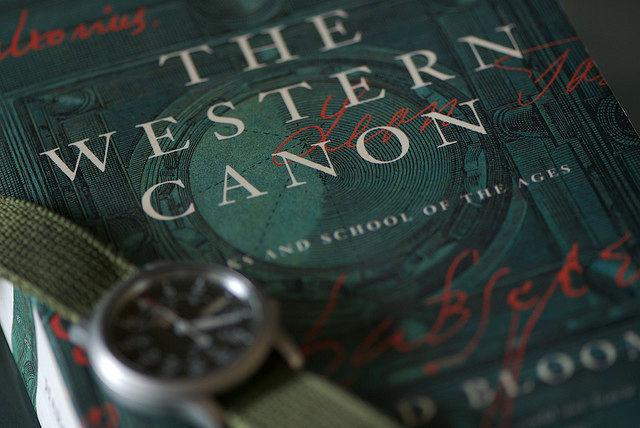
The Western canon is the body of books, music, and art that scholars generally accept as the most important and influential in shaping Western culture. It includes works of fiction, non-fiction, poetry, drama, music, art, sculpture, and architecture generally perceived as being of major artistic merit and representing the high culture of Europe and North America. Philosopher John Searle suggests that the Western canon can be roughly defined as "a certain Western intellectual tradition that goes from, say, Socrates to Wittgenstein in philosophy, and from Homer to James Joyce in literature".
The canon of books, including Western literature and Western philosophy, has been most stable, although expanding to include more women and racial minorities, while the canons of music and the visual arts have greatly expanded to cover the Middle Ages and other periods, once largely overlooked. Some examples of newer media such as cinema have attained a precarious position in the canon.
PACHELBEL CANON

No comments:
Post a Comment