
Saturday, January 7, 2017

"Be The Exception" - WEEK 17 V & E
Week 17
>> John Locke
 The Declaration of the Rights of Man and of the Citizen , passed by France's National Constituent Assembly in August 1789, is a fundamental document of the French Revolution and in the history of human and civil rights. The Declaration was directly influenced by Thomas Jefferson, working with General Lafayette, who introduced it. Influenced also by the doctrine of "natural right", the rights of man are held to be universal: valid at all times and in every place, pertaining to human nature itself. It became the basis for a nation of free individuals protected equally by law. It is included in the preamble of the constitutions of both the Fourth French Republic (1946) and Fifth Republic (1958) and is still current. Inspired in part by the American Revolution, and also by the Enlightenment philosophers, the Declaration was a core statement of the values of the French Revolution and had a major impact on the development of freedom and democracy in Europe and worldwide.
The Declaration, together with Magna Carta, the American Declaration of Independence, Constitution, and Bill of Rights, inspired in large part the 1948 United NationsUniversal Declaration of Human Rights.
~Les Miserables
 Les Misérables is a French historical novel by Victor Hugo, first published in 1862, that is considered one of the greatest novels of the 19th century. In the English-speaking world, the novel is usually referred to by its original French title. However, several alternatives have been used, including The Miserables, The Wretched, The Miserable Ones, The Poor Ones, The Wretched Poor, The Victims and The Dispossessed. Beginning in 1815 and culminating in the 1832 June Rebellion in Paris, the novel follows the lives and interactions of several characters, particularly the struggles of ex-convict Jean Valjean and his experience of redemption.
Examining the nature of law and grace, the novel elaborates upon the history of France, the architecture and urban design of Paris, politics, moral philosophy, antimonarchism, justice, religion, and the types and nature of romantic and familial love. Les Misérables has been popularized through numerous adaptations for the stage, television, and film, including a musical and a film adaptation of that musical.
de- : down, away from
deaden : to make something weaker or less noticeable
decisive : able to make choice quickly and cofidently
DECLARATION OF INDEPENDENCE
When armed conflict between bands of American colonists and British soldiers began in April 1775, the Americans were ostensibly fighting only for their rights as subjects of the British crown. By the following summer, with the Revolutionary War in full swing, the movement for independence from Britain had grown, and delegates of the Continental Congress were faced with a vote on the issue. In mid-June 1776, a five-man committee including Thomas Jefferson, John Adams and Benjamin Franklin was tasked with drafting a formal statement of the colonies’ intentions. The Congress formally adopted the Declaration of Independence–written largely by Jefferson–in Philadelphia on July 4, a date now celebrated as the birth of American independence.
 | ||
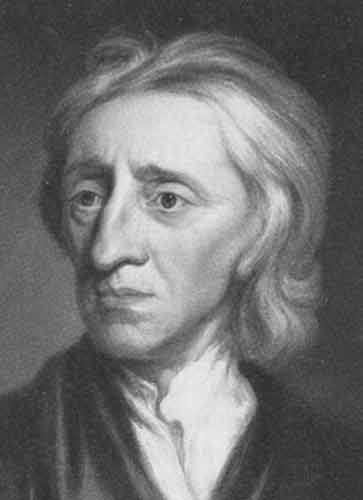 |
| Portrait of Locke in 1697 |
John Locke FRS (29 August 1632 – 28 October 1704) was an English philosopher and physician, widely regarded as one of the most influential of Enlightenment thinkers and commonly known as the "Father of Liberalism". Considered one of the first of the British empiricists, following the tradition of Sir Francis Bacon, he is equally important to social contract theory. His work greatly affected the development of epistemology and political philosophy. His writings influenced Voltaire and Jean-Jacques Rousseau, many Scottish Enlightenment thinkers, as well as the American revolutionaries. His contributions to classical republicanism and liberal theory are reflected in the United States Declaration of Independence.
>> Declaration of The Right of Man and of The Citizen
The Declaration of the Rights of Man and of the Citizen , passed by France's National Constituent Assembly in August 1789, is a fundamental document of the French Revolution and in the history of human and civil rights. The Declaration was directly influenced by Thomas Jefferson, working with General Lafayette, who introduced it. Influenced also by the doctrine of "natural right", the rights of man are held to be universal: valid at all times and in every place, pertaining to human nature itself. It became the basis for a nation of free individuals protected equally by law. It is included in the preamble of the constitutions of both the Fourth French Republic (1946) and Fifth Republic (1958) and is still current. Inspired in part by the American Revolution, and also by the Enlightenment philosophers, the Declaration was a core statement of the values of the French Revolution and had a major impact on the development of freedom and democracy in Europe and worldwide.The Declaration, together with Magna Carta, the American Declaration of Independence, Constitution, and Bill of Rights, inspired in large part the 1948 United NationsUniversal Declaration of Human Rights.
~Les Miserables
Les Misérables is a French historical novel by Victor Hugo, first published in 1862, that is considered one of the greatest novels of the 19th century. In the English-speaking world, the novel is usually referred to by its original French title. However, several alternatives have been used, including The Miserables, The Wretched, The Miserable Ones, The Poor Ones, The Wretched Poor, The Victims and The Dispossessed. Beginning in 1815 and culminating in the 1832 June Rebellion in Paris, the novel follows the lives and interactions of several characters, particularly the struggles of ex-convict Jean Valjean and his experience of redemption.Examining the nature of law and grace, the novel elaborates upon the history of France, the architecture and urban design of Paris, politics, moral philosophy, antimonarchism, justice, religion, and the types and nature of romantic and familial love. Les Misérables has been popularized through numerous adaptations for the stage, television, and film, including a musical and a film adaptation of that musical.
*** PREFIX, ROOT, SUFFIX ***
ab- : from, from off, down, away
abrogation : annulling of (a law) by legislative action
abrupt : sudden, unceremonious
abnormal : deviating from a fixed rule, irregular
de- : down, away from
deaden : to make something weaker or less noticeable
decisive : able to make choice quickly and cofidently
ob- / op- : toward, against, across, down
obstacle : something that makes it difficult
opponent : rival
opposite : located at another side
obstacle : something that makes it difficult
opponent : rival
opposite : located at another side
"Be The Exception" - WEEK 16 V & E
Week 16
~Jane Eyre
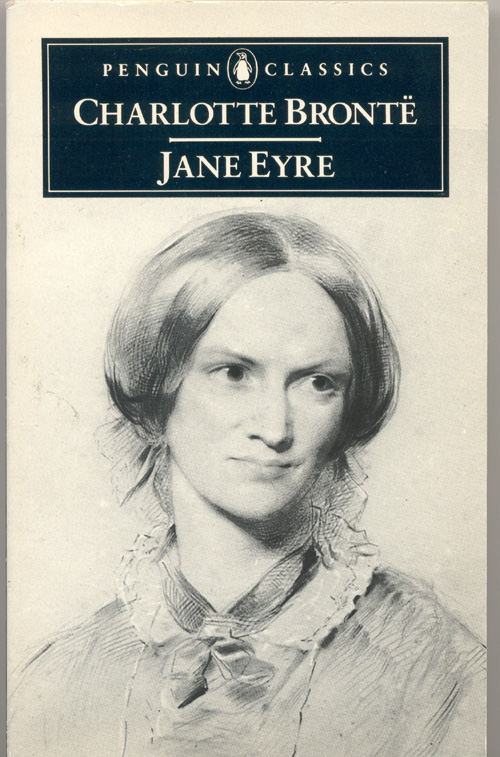 Jane Eyre (originally published as Jane Eyre: An Autobiography) is a novel by English writer Charlotte Brontë. It was published on 16 October 1847, by Smith, Elder & Co. of London, England, under the pen name "Currer Bell." The first American edition was published the following year by Harper & Brothers of New York.
 Primarily of the Bildungsroman genre, Jane Eyre follows the emotions and experiences of its eponymous heroine, including her growth to adulthood and her love for Mr. Rochester, the Byronic master of fictitious Thornfield Hall. In its internalisation of the action—the focus is on the gradual unfolding of Jane's moral and spiritual sensibility, and all the events are coloured by a heightened intensity that was previously the domain of poetry—Jane Eyre revolutionised the art of fiction. Charlotte Brontë has been called the 'first historian of the private consciousness' and the literary ancestor of writers like Joyce and Proust. The novel contains elements of social criticism, with a strong sense of morality at its core, but is nonetheless a novel many consider ahead of its time given the individualistic character of Jane and the novel's exploration of classism, sexuality, religion, and proto-feminism.
~No Strings Attached
 No Strings Attached is a 2011 American romantic comedy film directed by Ivan Reitman and written by Elizabeth Meriwether. Starring Natalie Portman and Ashton Kutcher, the film is about two friends who decide to make a pact to have "no strings attached" casual sex without falling in love with each other. The film was released in the United States on January 21, 2011.
*** Jane Eyre and No Strings Attached
~~~ SONGS ~~~
My Old Kentucky Home
by: Stephen Foster
The sun shines bright in the old Kentucky home,
Tis summer, the people are gay;
The corn-top's ripe and the meadow's in the bloom
While the birds make music all the day.
The young folks roll on the little cabin floor
All merry, all happy and bright;
By 'n by hard times comes a knocking at the door
Then my old Kentucky home, Good-night!
Chorus:
Weep no more my lady.
Oh! Weep no more today!
We will sing one song
For my old Kentucky home
For the old Kentucky home, far away.
Oh! Weep no more today!
We will sing one song
For my old Kentucky home
For the old Kentucky home, far away.
Jeanie With The Light Brown Hair
by: Stephen Foster
I dream of Jeannie with the light brown hair
Borne, like a vapor, on the summer air
I see her tripping where the bright streams play
Happy as the daisies that dance on her way
Many were the wild notes her merry voice would pour
Many were the blithe birds that warbled them o'er
Oh! I dream of Jeannie with the light brown hair
Floating, like a vapor, on the soft, summer air
I long for Jeannie with the day dawn smile
Radiant in gladness, warm with winning guile
I hear her melodies, like joys gone by
Sighing round my heart o'er the fond hopes that die
Sighing like the night wind and sobbing like the rain
Wailing for the lost one that comes not again
Oh! I long for Jeannie, and my heart bows low
Never more to find her where the bright waters flow
I sigh for Jeannie, but her light form strayed
Far from the fond hearts round her native glade
Her smiles have vanished and her sweet songs flown
Flitting like the dreams that have cheered us and gone
Now the nodding wild flow'rs may wither on the shore
While her gentle fingers will cull them no more
Oh! I sigh for Jeannie with the light brown hair
Floating like a vapor, on the soft summer air
Beautiful Dreamer
by: Stephen Foster
Beautiful dreamer,
Wake unto me
Starlight and dewdrops
Are awaiting thee
Sounds of the rude world
Heard in the day
Led by the moonlight
Have all passed away
Beautiful dreamer,
Queen of my song
List' while I woo thee
With soft melody
Gone are the cares of
Life's busy throng
Beautiful dreamer
Awake unto me
Beautiful dreamer,
Awake unto me
Starlight and dewdrops
Are awaiting thee
Sounds of the rude world
Heard in the day
Led by the moonlight
Have all passed away
Beautiful dreamer,
Queen of my song
List' while I woo thee
With soft melody
Gone are the cares of
Life's busy throng
Beautiful dreamer
Awake unto me
Beautiful dreamer,
Awake unto me
*** PREFIX, ROOT, SUFFIX ***
depreciate : to cause something for a lower price
decrease : to become smaller in amount, size, number, etc.
male- : bad
malignant : very serious and dangerous that may cause death
malevolent : attempt to do harm to another people
cap- : head
uncap : reversed, opposite
madcap : very foolish or silly
capital : of or pertaining to the head
** WORDS **
- Excoriate: to criticize severely
- Canard: a false report or story
- Main: disable
- Prerogative: a right or privilege
"Be The Exception" - WEEK 15 V & E
Week 15
UTOPIA
A Utopia is an imagined community or society that possesses highly desirable or nearly perfect qualities.
Utopian ideals often place emphasis on egalitarian principles of equality in economics, government and justice, though by no means exclusively, with the method and structure of proposed implementation varying based on ideology. According to Lyman Tower Sargent "[t]here are socialist, capitalist, monarchical, democratic, anarchist, ecological, feminist, patriarchal, egalitarian, hierarchical, racist, left-wing, right-wing, reformist, free love, nuclear family, extended family, gay, lesbian, and many more utopias".
 |
| Following the yellow brick road: Dorothy and friends head for the utopia of Oz |
Utopian ideals often place emphasis on egalitarian principles of equality in economics, government and justice, though by no means exclusively, with the method and structure of proposed implementation varying based on ideology. According to Lyman Tower Sargent "[t]here are socialist, capitalist, monarchical, democratic, anarchist, ecological, feminist, patriarchal, egalitarian, hierarchical, racist, left-wing, right-wing, reformist, free love, nuclear family, extended family, gay, lesbian, and many more utopias".

>> Dystopia
A Dystopia is a community or society that is undesirable or frightening. It is translated as "not-good place", an antonym of utopia, a term that was coined by Sir Thomas More and figures as the title of his most well-known work, Utopia (the blueprint for an ideal society with minimal crime, violence and poverty).
Dystopian societies appear in many artistic works, particularly in stories set in the future. Some of the most famous examples are George Orwell's 1984 and Aldous Huxley's Brave New World. Dystopias are often characterized by dehumanization, totalitarian governments, environmental disaster, or other characteristics associated with a cataclysmic decline in society.
 |
| Dystopia Disaster |
THOMAS MORE
Sir Thomas More (7 February 1478 – 6 July 1535), venerated by Roman Catholics as Saint Thomas More, was an English lawyer, social philosopher, author, statesman and noted Renaissance humanist. He was also a councillor to Henry VIII, and Lord High Chancellor of England from October 1529 to 16 May 1532. He also wrote Utopia, published in 1516, about the political system of an imaginary ideal island nation.
After refusing to take the Oath of Supremacy, he was convicted of treason and beheaded. Of his execution, he was reported to have said: "I die the King's good servant, and God's first."
Pope Pius XI canonised More in 1935 as a martyr. Pope John Paul II in 2000 declared him the "heavenly Patron of Statesmen and Politicians." Since 1980, the Church of England has remembered More liturgically as a Reformation martyr. The Soviet Union honoured him for the Communist attitude toward property rights expressed in Utopia.
After refusing to take the Oath of Supremacy, he was convicted of treason and beheaded. Of his execution, he was reported to have said: "I die the King's good servant, and God's first."
Pope Pius XI canonised More in 1935 as a martyr. Pope John Paul II in 2000 declared him the "heavenly Patron of Statesmen and Politicians." Since 1980, the Church of England has remembered More liturgically as a Reformation martyr. The Soviet Union honoured him for the Communist attitude toward property rights expressed in Utopia.
 |
~~~ SONGS ~~~
It's The Most Wonderful Time of The Year
by: Andy Williams
It's the most wonderful time of the year
With the kids jingle belling
And everyone telling you be of good cheer
It's the most wonderful time of the year
With the kids jingle belling
And everyone telling you be of good cheer
It's the most wonderful time of the year
It's the hap-happiest season of all
With those holiday greetings and gay happy meetings
When friends come to call
It's the hap-happiest season of all
With those holiday greetings and gay happy meetings
When friends come to call
It's the hap-happiest season of all
There'll be parties for hosting
Marshmallows for toasting
And caroling out in the snow
There'll be scary ghost stories
And tales of the glories of
Christmases long, long ago
Marshmallows for toasting
And caroling out in the snow
There'll be scary ghost stories
And tales of the glories of
Christmases long, long ago
It's the most wonderful time of the year
There'll be much mistltoeing
And hearts will be glowing
When love ones are near
It's the most wonderful time of the year
There'll be much mistltoeing
And hearts will be glowing
When love ones are near
It's the most wonderful time of the year
There'll be parties for hosting
Marshmallows for toasting
And caroling out in the snow
There'll be scary ghost stories
And tales of the glories of
Christmases long, long ago
Marshmallows for toasting
And caroling out in the snow
There'll be scary ghost stories
And tales of the glories of
Christmases long, long ago
It's the most wonderful time of the year
There'll be much mistltoeing
And hearts will be glowing
When love ones are near
It's the most wonderful time
Yes the most wonderful time
Oh the most wonderful time
Of the year
There'll be much mistltoeing
And hearts will be glowing
When love ones are near
It's the most wonderful time
Yes the most wonderful time
Oh the most wonderful time
Of the year
*CHRISTMAS CAROL SONGS*
Hark The Herald Angel Sing
Glory to the newborn King,
Peace on earth, and mercy mild,
God and sinners reconcile.
Joyful, all ye nations, rise,
Join the triumph of the skies;
With the angelic host proclaim,
'Christ is born in Bethlehem'
Hark! the herald angels sing,
Glory to the newborn King.
Christ, by highest heaven adored,
Christ, the everlasting Lord,
Late in time behold him come,
Offspring of a virgin's womb.
Veiled in flesh the Godhead see;
Hail, the incarnate deity,
Pleased as Man with to dwell,
Jesus, our Emmanuel!
Hark! the herald angels sing,
Glory to the newborn King.
Hail, the heaven-born Prince of peace!
Hail the Sun of righteousness!
Light and life to all he brings,
Risen with healing in his wings.
Mild he lays his glory by,
Born that man no more may die,
Born to raise the suns of earth,
Born to give them second birth.
Hark! the herald angels sing,
Glory to the newborn King.
Twelves Days of Christmas
On the first day of Christmas
my true love sent to me:
A Partridge in a Pear Tree
On the second day of Christmas
my true love sent to me:
Two Turtle Doves
and a Partridge in a Pear Tree
On the third day of Christmas
my true love sent to me:
Three French Hens
Two Turtle Doves
and a Partridge in a Pear Tree
On the fourth day of Christmas
my true love sent to me:
Four Calling Birds
Three French Hens
Two Turtle Doves
and a Partridge in a Pear Tree
On the fifth day of Christmas
my true love sent to me:
Five Golden Rings
Four Calling Birds
Three French Hens
Two Turtle Doves
and a Partridge in a Pear Tree2
On the sixth day of Christmas
my true love sent to me:
Six Geese a Laying
Five Golden Rings
Four Calling Birds
Three French Hens
Two Turtle Doves
and a Partridge in a Pear Tree1
On the seventh day of Christmas
my true love sent to me:
Seven Swans a Swimming
Six Geese a Laying
Five Golden Rings
Four Calling Birds
Three French Hens
Two Turtle Doves
and a Partridge in a Pear Tree1
On the eighth day of Christmas
my true love sent to me:
Eight Maids a Milking
Seven Swans a Swimming
Six Geese a Laying
Five Golden Rings
Four Calling Birds
Three French Hens
Two Turtle Doves
and a Partridge in a Pear Tree
On the ninth day of Christmas
my true love sent to me:
Nine Ladies Dancing
Eight Maids a Milking
Seven Swans a Swimming
Six Geese a Laying
Five Golden Rings
Four Calling Birds
Three French Hens
Two Turtle Doves
and a Partridge in a Pear Tree1
On the tenth day of Christmas
my true love sent to me:
Ten Lords a Leaping
Nine Ladies Dancing
Eight Maids a Milking
Seven Swans a Swimming
Six Geese a Laying
Five Golden Rings
Four Calling Birds
Three French Hens
Two Turtle Doves
and a Partridge in a Pear Tree1
On the eleventh day of Christmas
my true love sent to me:
Eleven Pipers Piping
Ten Lords a Leaping
Nine Ladies Dancing
Eight Maids a Milking
Seven Swans a Swimming
Six Geese a Laying
Five Golden Rings
Four Calling Birds
Three French Hens
Two Turtle Doves
and a Partridge in a Pear Tree1
On the twelfth day of Christmas
my true love sent to me:
12 Drummers Drumming
Eleven Pipers Piping
Ten Lords a Leaping
Nine Ladies Dancing
Eight Maids a Milking
Seven Swans a Swimming
Six Geese a Laying
Five Golden Rings
Four Calling Birds
Three French Hens
Two Turtle Doves
and a Partridge in a Pear Tree
*** PREFIX, ROOT, SUFFIX ***
pan- : all
panoptic : fully visible, seen by all
panoply : complete suit of armor
-ium/-eum : a suffix found on Latin, derivatives of verbs, deverbal compound
nasturtium : other types of compounds
sanitarium : place to recuparate
museum : a building is used to exhibit interesting and valuable things
mal- : bad, badly, poorly, wrong, wrongly, ill
malapert : impudent
malevolent : ill, envious
malicious : showing ill will, wicked
** WORDS **
- Expedient: providing an esay and quick way to solve a problem
- Callous: unfeeling
- Impious: irreverent
- Capricious: changing often and quickly
- Ennui: boring
- Sanction: certify
- Vapid: not lively or interesting
- Extol: to prise
- Elucidate: to make something clear or easy to understand
- Umbrage: a feeling of being offended
"Be The Exception" WEEK 14 V & E
Week 14
PARABLE OF THE PRODIGAL SON
TEN COMMANDMENTS

" The Road Not Taken "
by: Robert Frost
Two roads diverged in a yellow wood
And sorry I could not travel both
And be one traveler, long I stood
And looked down one as far as I could
To where it bent in the undergrowth; 5
Then took the other, as just as fair
And having perhaps the better claim,
Because it was grassy and wanted wear;
Though as for that, the passing there
Had worn them really about the same, 10
And both that morning equally lay
In leaves no step had trodden black.
Oh, I kept the first for another day!
Yet knowing how way leads on to way,
I doubted if I should ever come back. 15
I shall be telling this with a sigh
Somewhere ages and ages hence:
Two roads diverged in a wood and I—
I took the one less traveled by,
And that has made all the difference. 20
> Analysis:
~~ MOVIE ~~
 A Room With a View
** watch movie: http://putlockers.ch/watch-a-room-with-a-view-online-free-putlocker.html
ten- : to hold
tenacious : not easily stopped
tenancy : the state or fact of owning something
tenable : capable of being defended against attack
a- : not
abnormal : deviating from fixed rule, irregular
apathy : freedom
abjure : abandon
PARABLE OF THE PRODIGAL SON
The Parable of the Prodigal Son (also known as the Lost Son, Running Son, Loving Father, or Lovesick Father) is one of the parables of Jesus which appears in Luke 15:11-32. Jesus Christ shares it with his disciples, the Pharisees and others.
In the story, a father has two sons. The younger son asks for his inheritance and after wasting his fortune (the word "prodigal" means "wastefully extravagant"), becomes destitute. He returns home with the intention of begging his father to be made one of his hired servants, expecting his relationship with his father is likely severed. The father welcomes him back and celebrates his return. The older son refuses to participate. The father reminds the older son that one day he will inherit everything. But, they should still celebrate the return of the younger son because he was lost and is now found.
It is the third and final part of a cycle on redemption, following the Parable of the Lost Sheep and the Parable of the Lost Coin. In Revised Common Lectionary and Latin Rite Catholic Lectionary, this parable is read on the fourth Sunday of Lent (in Year C), in the latter it is also included in the long form of the Gospel on the 24th Sunday of Ordinary Time in Year C, along with the preceding two parables of the cycle. In the Eastern Orthodox Church it is read on the Sunday of the Prodigal Son.
In the story, a father has two sons. The younger son asks for his inheritance and after wasting his fortune (the word "prodigal" means "wastefully extravagant"), becomes destitute. He returns home with the intention of begging his father to be made one of his hired servants, expecting his relationship with his father is likely severed. The father welcomes him back and celebrates his return. The older son refuses to participate. The father reminds the older son that one day he will inherit everything. But, they should still celebrate the return of the younger son because he was lost and is now found.
It is the third and final part of a cycle on redemption, following the Parable of the Lost Sheep and the Parable of the Lost Coin. In Revised Common Lectionary and Latin Rite Catholic Lectionary, this parable is read on the fourth Sunday of Lent (in Year C), in the latter it is also included in the long form of the Gospel on the 24th Sunday of Ordinary Time in Year C, along with the preceding two parables of the cycle. In the Eastern Orthodox Church it is read on the Sunday of the Prodigal Son.
 |
| Parable of the Prodigal Son |
TEN COMMANDMENTS
The Ten Commandments, also known as the Decalogue, are a set of biblical principles relating to ethics and worship, which play a fundamental role in Judaism and Christianity. The commandments include instructions to worship only God, to honour one's parents, and to keep the sabbath, as well as prohibitions against idolatry, blasphemy, murder, adultery, theft, dishonesty, and coveting. Different religious groups follow different traditions for interpreting and numbering them.
The Ten Commandments are listed twice in the Hebrew Bible, first at Exodus 20:1–17, and then at Deuteronomy 5:6–21. Both versions state that God inscribed them on two stone tablets, which he gave to Moses on Mount Sinai. Modern scholarship has found likely influences in Hittite and Mesopotamian laws and treaties, but is divided over exactly when the Ten Commandments were written and who wrote them.
The Ten Commandments are listed twice in the Hebrew Bible, first at Exodus 20:1–17, and then at Deuteronomy 5:6–21. Both versions state that God inscribed them on two stone tablets, which he gave to Moses on Mount Sinai. Modern scholarship has found likely influences in Hittite and Mesopotamian laws and treaties, but is divided over exactly when the Ten Commandments were written and who wrote them.
~~ POEM ~~
" The Road Not Taken "
by: Robert Frost
Two roads diverged in a yellow wood
And sorry I could not travel both
And be one traveler, long I stood
And looked down one as far as I could
To where it bent in the undergrowth; 5
Then took the other, as just as fair
And having perhaps the better claim,
Because it was grassy and wanted wear;
Though as for that, the passing there
Had worn them really about the same, 10
And both that morning equally lay
In leaves no step had trodden black.
Oh, I kept the first for another day!
Yet knowing how way leads on to way,
I doubted if I should ever come back. 15
I shall be telling this with a sigh
Somewhere ages and ages hence:
Two roads diverged in a wood and I—
I took the one less traveled by,
And that has made all the difference. 20
> Analysis:
This poem is about some one cursed with a perfect marriage of form and content, arresting
phrase wrought from simple words, and resonant metaphor, it seems
as if “The Road Not Taken” gets memorized without really being read.
For this it has died the cliché’s un-death of trivial immortality.
But you yourself can resurrect it from zombie-hood by
reading it—not with imagination, even, but simply with accuracy.
Of the two roads the speaker says “the passing there / Had worn
them really about the same.” In fact, both roads “that morning lay
/ In leaves no step had trodden black.” Meaning: Neither of
the roads is less traveled by. These are the facts; we cannot
justifiably ignore the reverberations they send through the easy aphorisms
of the last two stanzas.
~~ MOVIE ~~
A Room With a View
A Room with a View is a 1985 British romance film, directed by James Ivory and produced by Ismail Merchant, of E. M. Forster's 1908 novel of the same name. The film closely follows the novel by use of the chapter titles to section the film into thematic segments. Set in England and Italy, it is about a young woman in the restrictive and repressed culture of Edwardian era England and her developing love for a free-spirited young man.
** watch movie: http://putlockers.ch/watch-a-room-with-a-view-online-free-putlocker.html
*** PREFIX, ROOT, SUFFIX ***
ten- : to hold
tenacious : not easily stopped
tenancy : the state or fact of owning something
tenable : capable of being defended against attack
a- : not
abnormal : deviating from fixed rule, irregular
apathy : freedom
abjure : abandon
** WORDS **
- Vertigo: dizziness
- Tacit: expressed or understoodwithour being directly stated
- Imperturbable: very calm
- Vituperation: blame, abuse
- Felicitous: very well suited
- Volition: the power to make your own choice
Friday, January 6, 2017
"Be The Exception" WEEK 13 V & E
Week 13
FRANCIS OF ASSISI
 Saint Francis of Assisi, born Giovanni di Pietro di Bernardone, informally named as Francesco (1181/1182 – 3 October 1226), was an Italian Roman Catholicfriar and preacher. He founded the men's Order of Friars Minor, the women’s Order of Saint Clare, the Third Order of Saint Francis and the Custody of the Holy Land. Francis is one of the most venerated religious figures in history.
Pope Gregory IX canonized Francis on 16 July 1228. Along with Saint Catherine of Siena, he was designated Patron saint of Italy. He later became associated with patronage of animals and the natural environment, and it became customary for Catholic and Anglican churches to hold ceremonies blessing animals on his feast day of 4 October.
~~ POEM ~~
" To Helen "
by: Edgar Allan Poe
> Analysis :
Bridge Over Troubled Water
by: Simon and Garkfunkel
Sound of Silence
by: Simon and Garkfunkel
Scarborough Fair
by: Simon and Garkfunkel
gen- : birth, start, begining
gene : a part of cell that controls the appearance, growth, etc.
generate : to produce
-tude : indicating state or condition
multitude : a great umber, a crowd
magnitude : greatness, size
plenitude : a large number of something
de- : down, away from
depreciate : to cause something for a lower price
decrease : to become smaller in amount, size, number, etc.
FRANCIS OF ASSISI
Saint Francis of Assisi, born Giovanni di Pietro di Bernardone, informally named as Francesco (1181/1182 – 3 October 1226), was an Italian Roman Catholicfriar and preacher. He founded the men's Order of Friars Minor, the women’s Order of Saint Clare, the Third Order of Saint Francis and the Custody of the Holy Land. Francis is one of the most venerated religious figures in history.Pope Gregory IX canonized Francis on 16 July 1228. Along with Saint Catherine of Siena, he was designated Patron saint of Italy. He later became associated with patronage of animals and the natural environment, and it became customary for Catholic and Anglican churches to hold ceremonies blessing animals on his feast day of 4 October.
ST. PETER
 |
| Saint Peter holding the key to the Kingdom |
Saint Peter (b, AD 30; d, between AD 64 and 68), also known as Simon Peter, Simeon, or Simōn pronunciation , according to the New Testament, was one of the Twelve Apostles of Jesus Christ, leaders of the early Christian Church. He is also the "Apostle of the Apostles", an honor 3rd-century theologian Hippolytus of Rome gave him, and the first pope of the Roman Catholic Church, ordained by Jesus in the "Rock of My Church" dialogue in Matthew 16:18. The ancient Christian churches all venerate Peter as a major saint and associate him with founding the Church of Antioch and later the Church in Rome, but differ about the authority of his successors in present-day Christianity.
According to Christian tradition, Peter was crucified in Rome under Emperor Nero Augustus Caesar. It is traditionally held that he was crucified upside down at his own request, since he saw himself unworthy to be crucified in the same way as Jesus. Tradition holds that he was crucified at the site of the Clementine Chapel. His remains are said to be those contained in the underground Confessio of St. Peter's Basilica, where Pope Paul VI announced in 1968 the excavated discovery of a first-century Roman cemetery. Every June 29 since 1736, a statue of Saint Peter in St. Peter's Basilica is adorned with papal tiara, ring of the fisherman, and papal vestments, as part of the celebration of the Feast of Saints Peter and Paul. According to Catholic doctrine, the direct papal successor to Saint Peter is the incumbent pope, currently Pope Francis.
~~ POEM ~~
" To Helen "
by: Edgar Allan Poe
Helen, thy beauty is to me
Like those Nicéan barks of yore,
That gently, o'er a perfumed sea,
The weary, way-worn wanderer bore
To his own native shore.
On desperate seas long wont to roam,
Thy hyacinth hair, thy classic face,
Thy Naiad airs have brought me home
To the glory that was Greece,
And the grandeur that was Rome.
Lo! in yon brilliant window-niche
How statue-like I see thee stand,
The agate lamp within thy hand!
Ah, Psyche, from the regions which
Are Holy-Land!
> Analysis :
The first stanza follows the pattern: ABABB; the second, ABABA; and the
third, ABBAB. The musicality of the poem is pleasant and Poe’s
vocabulary choice is soothing to the ear. The alliteration emphasizes
the calming impact of this woman’s beauty. The theme of the poem is the elevation of a human woman to the status of a Greek goddess who represents the human soul. Lines (9,10) are two of the most famous in poetry describing the ancient civilizations and their love of beauty.
~~ SONGS ~~
Bridge Over Troubled Water
by: Simon and Garkfunkel
Sound of Silence
by: Simon and Garkfunkel
Scarborough Fair
by: Simon and Garkfunkel
*** PREFIX, ROOT, SUFFIX ***
gen- : birth, start, begining
gene : a part of cell that controls the appearance, growth, etc.
generate : to produce
-tude : indicating state or condition
multitude : a great umber, a crowd
magnitude : greatness, size
plenitude : a large number of something
de- : down, away from
depreciate : to cause something for a lower price
decrease : to become smaller in amount, size, number, etc.
** WORDS **
- Unkempt: messy, untidy
- Asinine: foolish
- Unmitigated: complete and total
- Sage: wise man
- Equanimity: calm emotion when dealing with problems
- Debacle: a great disaster or complete failure
- Mien: apperance
- Gaunt: emaciated
- Grotesque: strange, weird
- Perfidious: not able to be trust
- Covet: to want
"Be The Exception" WEEK 12 V & E
Week 12
ADVENTURES OF HUCKBERRY FINN

THE PINK PANTHER

** watch movie: http://putlockers.ch/watch-the-pink-panther-online-free-putlocker.html
therm- : hot, heat
thermal : relating to, caused by heat
thermosphere : the part of earth's atmosphere
thermograph : automatic self-registering thermometer
candid- : honest, sincere
candidly : honestly, sincerely
candidacy : the position of a person who is trying to elected
path- : feeling
pathetic : affecting the emotions, exciting passions
sympathy : the feeling that you care about and sorry for someone else's trouble
male- : bad
malignant : very serious and dangerous that may cause death
malevolent : attempt to do harm to another people
pan- : all
panoptic : fully visible, seen by all
panoply : complete suit of armor
trans- : across, beyond, through
transpire : pass off in the form of a vapor or liquid
transparent : show light through
ADVENTURES OF HUCKBERRY FINN
Adventures of Huckleberry Finn (or, in more recent editions, The Adventures of Huckleberry Finn) is a novel by Mark Twain, first published in the United Kingdom in December 1884 and in the United States in February 1885. Commonly named among the Great American Novels, the work is among the first in major American literature to be written throughout in vernacular English, characterized by local color regionalism. It is told in the first person by Huckleberry "Huck" Finn, a friend of Tom Sawyer and narrator of two other Twain novels (Tom Sawyer Abroad and Tom Sawyer, Detective). It is a direct sequel to The Adventures of Tom Sawyer.
The book is noted for its colorful description of people and places along the Mississippi River. Set in a Southern antebellum society that had ceased to exist about 20 years before the work was published, Adventures of Huckleberry Finn is an often scathing satire on entrenched attitudes, particularly racism.
THE PINK PANTHER
The Pink Panther is a series of comedy-mystery films featuring an inept French police detective, Inspector Jacques Clouseau. The series began with the release of The Pink Panther (1963). The role of Clouseau was originated by, and is most closely associated with, Peter Sellers. Most of the films were directed and co-written by Blake Edwards, with theme music composed by Henry Mancini. Elements and characters inspired by the films were adapted into other media, including books, comic books and animated series.
In the movies, the Pink Panther is a large and valuable pink diamond
which is first shown in the opening film in the series. The diamond is
called the "Pink Panther" because the flaw at its center, when viewed
closely, is said to resemble a leaping pink panther. The phrase reappears in the title of the fourth film The Return of the Pink Panther,
in which the theft of the diamond is again the center of the plot. The
phrase was used for all the subsequent films in the series, even when
the jewel did not figure in the plot. It ultimately appeared in six of
the eleven films.
The Pink Panther Theme Song (Original Version)
** watch movie: http://putlockers.ch/watch-the-pink-panther-online-free-putlocker.html
*** PREFIX, ROOT, SUFFIX ***
therm- : hot, heat
thermal : relating to, caused by heat
thermosphere : the part of earth's atmosphere
thermograph : automatic self-registering thermometer
candid- : honest, sincere
candidly : honestly, sincerely
candidacy : the position of a person who is trying to elected
path- : feeling
pathetic : affecting the emotions, exciting passions
sympathy : the feeling that you care about and sorry for someone else's trouble
male- : bad
malignant : very serious and dangerous that may cause death
malevolent : attempt to do harm to another people
pan- : all
panoptic : fully visible, seen by all
panoply : complete suit of armor
trans- : across, beyond, through
transpire : pass off in the form of a vapor or liquid
transparent : show light through
** WORDS **
- Vogue: something that is fashionable or popular
- Vague: not clear in meaning
- Heresy: doctrine or opinion at variance with establish standards
- Slander: to disgrace or to dishonor
- Slender: very narrow, not wide, thin
- Incumbent: a person who hold a particular position
- Salubrious: making good health possible
- Discreet: careful
- Slovenly: careless
"Be The Exception" - WEEK 11 V & E
Week 11
THE PHILOSOPHY OF COMPOSITION

"The Philosophy of Composition" is an 1846 essay written by American writer Edgar Allan Poe that elucidates a theory about how good writers write when they write well. He concludes that length, "unity of effect" and a logical method are important considerations for good writing. He also makes the assertion that "the death... of a beautiful woman" is "unquestionably the most poetical topic in the world". Poe uses the composition of his own poem "The Raven" as an example. The essay first appeared in the April 1846 issue of Graham's Magazine. It is uncertain if it is an authentic portrayal of Poe's own method.
>> The Raven - by: Edgar Allan Poe
"The Raven" is a narrative poem by American writer Edgar Allan Poe. First published in January 1845, the poem is often noted for its musicality, stylized language, and supernatural atmosphere. It tells of a talking raven's mysterious visit to a distraught lover, tracing the man's slow fall into madness. The lover, often identified as being a student, is lamenting the loss of his love, Lenore. Sitting on a bust of Pallas, the raven seems to further instigate his distress with its constant repetition of the word "Nevermore". The poem makes use of a number of folk, mythological, religious, and classical references.

~~~ POEMS ~~~
" Do not go gentle into that good night "
by: Dylan Thomas
Do not go gentle into that good night,
Old age should burn and rave at close of day;
Rage, rage against the dying of the light.
Though wise men at their end know dark is right,
Because their words had forked no lightning they
Do not go gentle into that good night.
Good men, the last wave by, crying how bright
Their frail deeds might have danced in a green bay,
Rage, rage against the dying of the light.
Wild men who caught and sang the sun in flight,
And learn, too late, they grieved it on its way,
Do not go gentle into that good night.
Grave men, near death, who see with blinding sight
Blind eyes could blaze like meteors and be gay,
Rage, rage against the dying of the light.
And you, my father, there on the sad height,
Curse, bless, me now with your fierce tears, I pray.
Do not go gentle into that good night.
Rage, rage against the dying of the light.
> Analysis :
The poem is written as a Villanelle and the title itself uses adjective (gentle) as adverb (gently), making the latent meaning even more present. Yet, even while Thomas and his Father were
struggling with their health, this poem assents the value of fighting
for life. Thomas argues, as Shakespeare did in Henry VI Part I, that we all need to: "Fight till the last gasp" (1.3.127).
Do Not Go Gentle Into That Good Night is, therefore not just about fighting against the blindness of the old man or Thomas's own battles, but about all of us raging against our weaknesses, and the gradual loss of our fire, passions, and life.
Do Not Go Gentle Into That Good Night is, therefore not just about fighting against the blindness of the old man or Thomas's own battles, but about all of us raging against our weaknesses, and the gradual loss of our fire, passions, and life.
" When i was One-and-Twenty "
by: A.E Housman
When I was one-and-twenty
When I was one-and-twenty
I heard a wise man say,
`Give crowns and pounds and guineas
But not your heart away;
Give pearls away and rubies
But keep your fancy free.'
But I was one-and-twenty
No use to talk to me.
When I was one-and-twenty
I heard him say again,
`The heart out of the bosom
Was never given in vain;
'Tis paid with sighs a plenty
And sold for endless rue.'
And I am two-and-twenty
And oh, 'tis true, 'tis true.
> Analysis :
This poem was written by A.E. Houseman. “When I was One-and-Twenty” was published in 1896. Housman’s remarkable love poem, “When I Was One-and-Twenty”, is simple and elegant. There are many of his poems in the collection titled “A Shropshire Lad”. He writes of youth typically not heeding wise advice.
There are two possible reasons for his failure to act. The first possibility is that he did not recognize the wisdom of the wise man until he turned older “two-and-twenty” (line 15). The other possibility is that the poem’s speaker did realize that it was a good advice at the time but was helpless to do anything about it because he was too young. Both of these ways of looking at the phrase “a wise man” (line 2) illustrate the same thing about knowledge. So it can only be absorbed when one is ready for it.
*** PREFIX, ROOT, SUFFIX ***
ob-/op- : toward, across, down, against
opponent : rival
obstacle : something that makes it difficult to do
opposite : located at another side
sym- : with, together
symbolize : represent
symbiosis : a relationship of two different kinds living things
sympathetic : having or showing support to people or something
de- : down, away from
depreciate : to cause something for a lower price
decrease : to become smaller in amount, size, number, etc.
** WORDS **
- Bliss: complete happiness
- Equanimity: calm emotion while dealing with problem or pressure
- Impede: block
- Propinquity: nearness in time or place
- Sedate: slow and relax
- Bedlam: a very noisy and confused state
- Gusto: enjoyment
- Gaudy: too brighter heavily decorated
- Jocose: humorous
- Galvanize: to become active
- Decorum: correct or proper behavior
Subscribe to:
Comments (Atom)